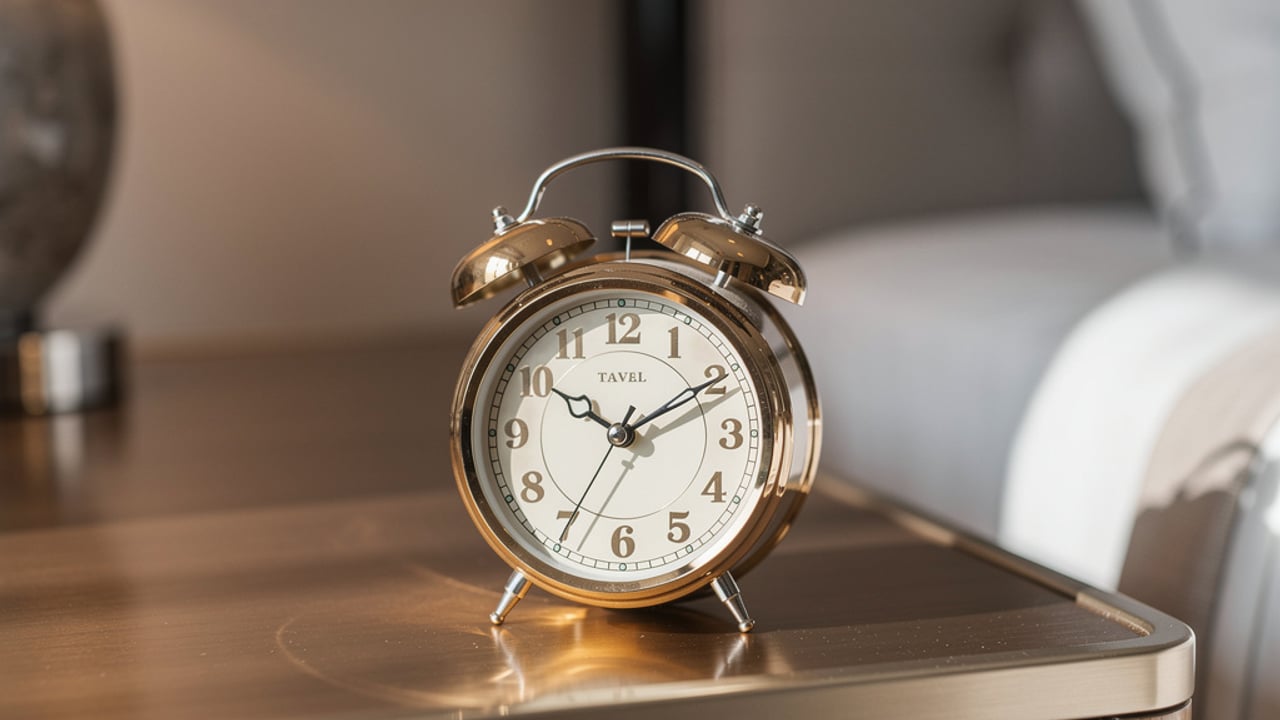
The Enduring Appeal of the travel alarm clock
The mid-twentieth century produced portable timekeeping instruments of remarkable ambition. Manufacturers across Switzerland, Germany, and France treated the travel alarm clock not as a utilitarian afterthought but as a miniaturised expression of horological culture. Postwar prosperity created a new class of mobile professional whose luggage demanded objects of equivalent sophistication to those adorning a desk or mantelpiece.
What distinguishes these pieces historically is the convergence of precision movement-making with the design languages then reshaping furniture, architecture, and consumer goods. The same Bauhaus-inflected geometry visible in Knoll’s office chairs appeared, in miniature, on the faces and cases of the finest portable clocks of the period. Collectors today pursue these objects for precisely that reason: they condense an era’s aesthetic ambitions into a form small enough to hold in one hand.
Notable Makers of the travel alarm clock
Several manufacturers defined the category during its golden decades. Jaeger-LeCoultre produced folding brass movements of extraordinary refinement, their cases opening like small books to reveal bevelled crystal faces. Swiza, operating from the Swiss Jura, offered broader production at rigorous quality — their eight-day movements remain prized for longevity. Reuge, better known for music boxes, contributed novelty pieces that merged mechanical song with timekeeping. German firms including Kienzle and Junghans introduced modernist case designs, some in anodised aluminium, that aligned with the Ulm School’s functionalist doctrine. Each maker’s archive tells a story of design ambition constrained and sharpened by the demands of portability.
Authenticating a Vintage travel alarm clock
Provenance documentation materially affects value. A signed movement, matching serial number on case and mechanism, and period-correct leather or leatherette case lining are primary indicators of an unrestored example. Later replacement crystals — identifiable by their acrylic rather than mineral glass composition — diminish horological integrity without necessarily impairing function. Collectors should request a full movement photograph before purchase. Reputable dealers will supply one. The quality of the escapement finishing, whether polished or brushed, often indicates production tier within a given manufacturer’s range.
Caring for Your travel alarm clock
A travel alarm clock in regular use requires servicing every seven to ten years. The lubricating oils applied during manufacture or prior service oxidise and congeal, creating friction that accelerates wear on jewelled bearings. A competent horological conservator will clean the movement ultrasonically, re-oil to contemporary standards, and regulate the escapement for accuracy. Storage demands cool, dry conditions away from magnetic fields — a particular concern given the prevalence of strong refrigerator magnets in domestic kitchens. Original cases should be preserved; they provide both physical protection and contextual authenticity that sophisticated collectors regard as integral to the object.
The market for these instruments has matured considerably. Early collectors concentrated on movement quality alone; current scholarship increasingly weights design authorship, period documentation, and the coherence of case, dial, and movement as an ensemble. Auction results from the past decade confirm that signed, documented examples by named designers command premiums of forty to sixty percent over unsigned equivalents of identical movement quality.
This collection is assembled accordingly: every piece offered here is accompanied by movement photography, case condition notes, and whatever provenance documentation the object’s history permits.