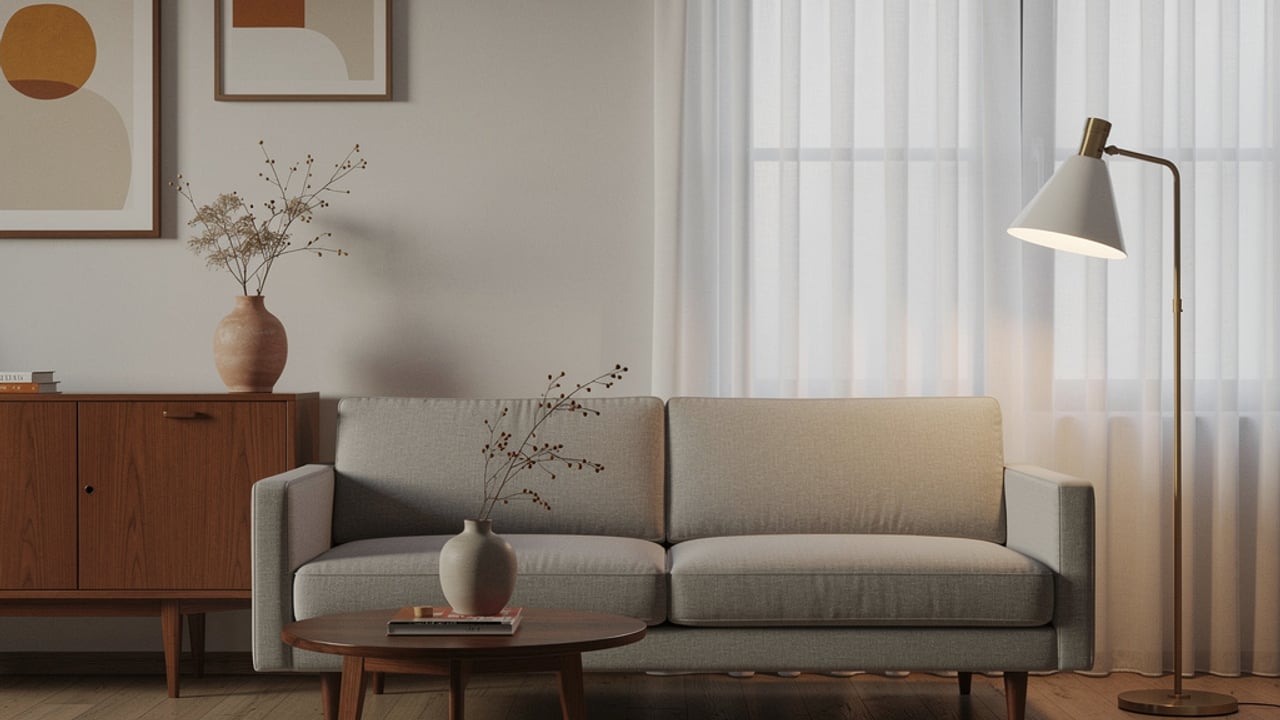
A Brief History of the mid-century modern interior
The postwar decades produced a singular convergence of optimism, industrial innovation, and humanist philosophy. Architects and furniture designers working across Scandinavia, the United States, and Italy began to dissolve the boundary between structure and decoration. Teak, rosewood, fibreglass, and moulded plywood became the vocabularies of a new domestic language — one that privileged the user’s comfort alongside formal rigour. The open plan, the low profile, and the unadorned surface were not stylistic accidents but considered positions. Manufacturers such as Herman Miller, Knoll, and Fritz Hansen gave these ideas physical permanence, commissioning work from figures whose names would become synonymous with the era. To inhabit a thoughtfully assembled mid-century modern interior is to participate in an ongoing conversation about what a designed life might mean.
Defining Characteristics of the mid-century modern interior
Several principles recur with consistency across the canon. Horizontality dominates: sideboards sit low, sofas hug the floor, and ceiling planes are left uninterrupted. Natural materials — solid teak, cane webbing, hand-thrown ceramics — coexist with industrial ones, including cast aluminium, fibreglass shells, and laminated surfaces. Colour palettes tend toward the considered: ochre, burnt orange, olive, and warm white punctuated by the deep grain of oiled hardwood. Joinery is exposed rather than concealed; the logic of construction is offered as ornament. Lighting operates sculpturally: arc lamps, adjustable task lights, and pendant forms by designers such as Poul Henningsen or Arco treat illumination as architectural gesture rather than afterthought.
Collecting and Sourcing Authentic mid-century modern interior Pieces
Authenticity demands scrutiny. Original production pieces carry maker’s marks, stamps, or labels specific to their manufacturer and period; reproductions, however well made, lack the material history that gives vintage furniture its resonance. Patina — the warm oxidation of brass hardware, the softened edges of a rosewood credenza — is evidence of provenance, not imperfection. When acquiring work for a mid-century modern interior, buyers should request documentation: purchase records, exhibition histories, or correspondence with dealers who handled the original estate. At mid-centurydesigns.com, every object is examined against period catalogues and, where applicable, authenticated by specialist consultants before listing.
Caring for Your mid-century modern interior Collection
Preservation begins with environment. Solid wood veneers respond adversely to fluctuating humidity; a stable range of forty to sixty percent relative humidity prevents checking and delamination. Direct sunlight degrades both upholstery and surface oils; sheer linen diffusers preserve the integrity of teak and rosewood without compromising the quality of natural light that defines the period aesthetic. Upholstered pieces in original fabric should be cleaned by conservators familiar with vintage textiles rather than subjected to commercial steam processes. A mid-century modern interior maintained with attention to these conditions appreciates not only in monetary value but in the depth of presence it commands within a space.
The ambition of the era was democratic: good design for broad audiences, executed without concession to superficiality. That ambition is worth honouring.