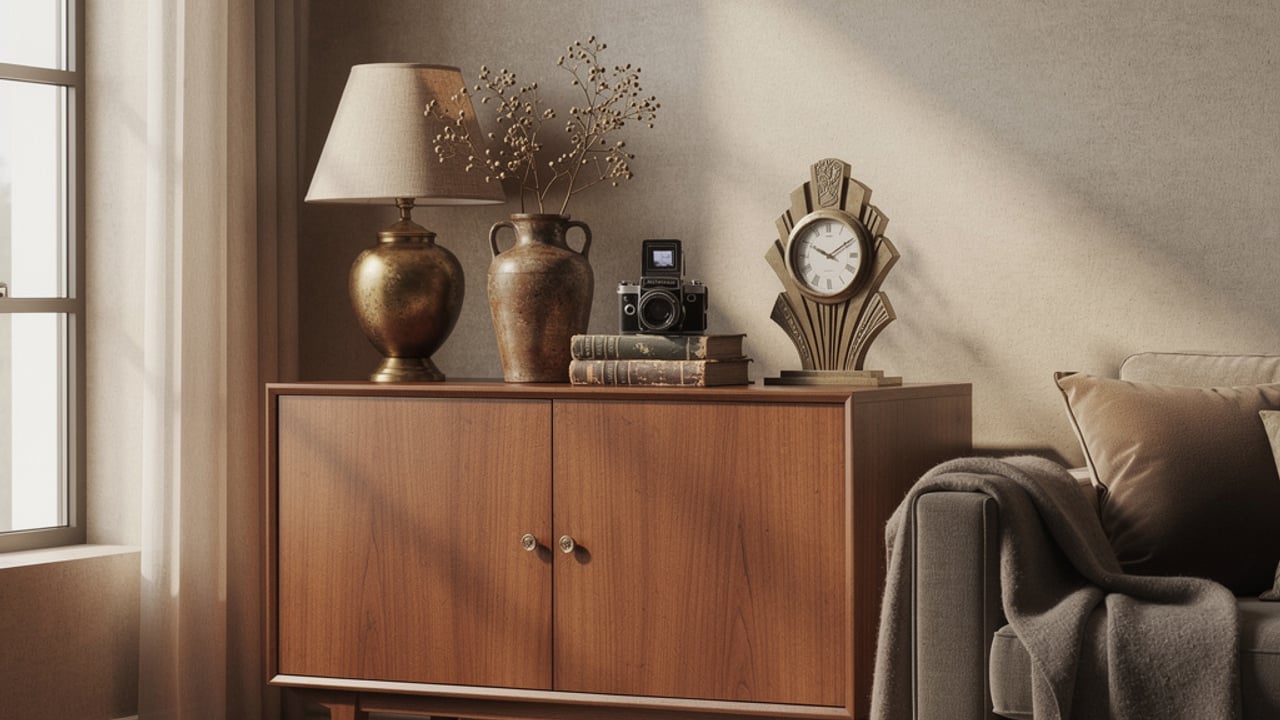
A Brief History of vintage decoration
The period between 1950 and 1980 produced a body of decorative work unprecedented in its formal ambition. Designers, ceramicists, and textile artists across Scandinavia, Italy, and North America treated the domestic interior as a site of cultural argument. Objects were not afterthoughts; they were propositions. A Tapio Wirkkala bowl, a Sasaki crystal vase, a Gio Ponti wall plate — each constituted a position on materials, geometry, and human scale.
The postwar economic expansion gave workshops and manufacturers the resources to experiment. Organic forms replaced prewar severity. Colour theory, informed by Bauhaus pedagogy and filtered through new plastics and glazing techniques, entered the living room. Craft and industrial production entered an uneasy, productive dialogue that defined the character of vintage decoration for three decades.
Collectors today recognise that these objects are not merely nostalgic. They represent a moment when designers believed that a well-considered ceramic or a precisely cast brass candlestick could orient a room — and, by extension, a life — toward something more considered.
The Material Language of vintage decoration
The materials favoured during this era were chosen for their tactile and optical qualities as much as their durability. Stoneware and porcelain from studios in Denmark and Finland carried matt glazes developed through rigorous kiln testing. Italian glass — notably from Murano — achieved extraordinary chromatic depth. Teak, walnut, and rosewood provided warm counterpoints to the harder geometries of brass and chrome.
Textiles occupied a significant position within vintage decoration of the period. Designers such as Marianne Strengell and Barbro Nilsson elevated flat-weave and pile techniques to a level of compositional sophistication comparable to painting. Woven hangings, printed fabrics, and hand-knotted rugs anchored interiors and introduced scale, rhythm, and narrative.
Understanding material provenance is essential when acquiring period pieces. Authentic examples bear the marks of hand-finishing: slight irregularities in glaze, visible tool marks in cast metal, the particular lustre of shellac rather than polyurethane varnish.
Authenticating and Acquiring vintage decoration
Authentication requires patience and methodical attention. Makers’ marks, studio stamps, and original paper labels are primary evidence. Secondary evidence includes period exhibition catalogues, manufacturer archives, and dealer provenance documentation. For significant acquisitions, consultation with specialist ceramics or glass historians is advisable.
At mid-centurydesigns.com, every object offered as vintage decoration has been assessed against primary source records. Condition reports note not only damage but patina character — distinguishing the honest wear of use from restorative intervention. Photographs under raking light reveal surface history that frontal images conceal.
The acquisition process should be understood as research. Buyers are encouraged to request archive references, to compare against documented examples in museum collections, and to engage with the scholarship that surrounds each designer’s output.
Caring for Your vintage decoration
Preservation begins with environment. Mid-century ceramics, glass, and metalwork are sensitive to humidity fluctuation and ultraviolet exposure. Display cases with UV-filtering glazing protect coloured glass from fading; stable relative humidity between 45 and 55 percent prevents crazing in earthenware glazes.
Cleaning should be conservative. Dry dusting with a soft brush is preferable to wet washing for most ceramics. Metal objects with original patina should never be polished with abrasive compounds; museum-grade microcrystalline wax provides protection without altering surface character. Textiles benefit from acid-free tissue interleaving during storage and should be kept from direct light exposure.
Handling vintage decoration with cotton gloves prevents the transfer of oils that accelerate tarnish and surface degradation. When in doubt, the conservator’s principle applies: do less rather than more.