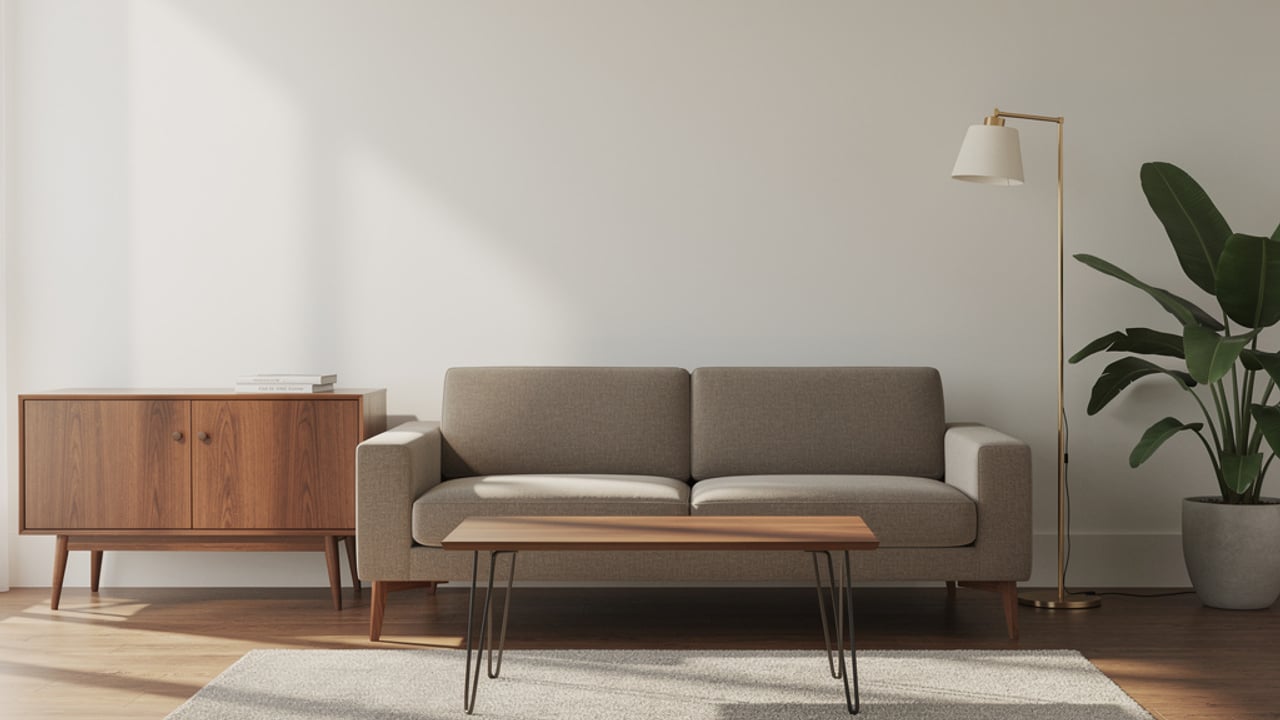
A Brief History of mid-century modern decor
The decades bracketed by 1950 and 1980 produced a material culture unlike any before or since. Architects trained in the Bauhaus tradition emigrated westward, carrying with them a conviction that well-designed objects could improve daily life. Manufacturing technologies developed for wartime—bent plywood, fibreglass shell moulding, welded steel rod—were redirected toward the domestic interior. The result was a vocabulary of forms that balanced structural honesty with ergonomic ambition.
This was not a decorative movement in the Victorian sense. Ornament was considered a liability. What emerged instead was a discipline of proportion, a faith that the right angle between seat and back, or the precise taper of a turned walnut leg, constituted beauty sufficient unto itself. Collectors and curators today recognise mid-century modern decor as one of the few applied-arts movements to achieve genuine consensus between commercial production and critical esteem.
The Defining Characteristics of mid-century modern decor
Several formal properties distinguish authentic period work from later revivals or licensed reproductions.
Material honesty remains the most reliable diagnostic criterion. Teak, rosewood, and moulded fibreglass appear in their natural states; veneers, where employed, are handled without apology. Upholstery fabrics by Alexander Girard or Maharam originals retain a graphic boldness that synthetic reproductions cannot replicate.
Structural legibility is equally important. On a genuine Eames lounge chair, every joint, weld, and tension point is visible and purposeful. Nothing is concealed that would be more interesting revealed.
Chromatic restraint characterises the palette: warm neutrals, ochres, and olive greens punctuated by single-colour accents. When mid-century modern decor is assembled with period textiles and lighting, the tonal relationships read as compositional rather than incidental.
Scale calibration distinguishes this furniture from both the heaviness of traditional European case goods and the weightlessness of later postmodern production. Pieces occupy space with what might be described as considered presence.
Where to Source Authentic mid-century modern decor
Provenance documentation is the primary criterion for acquisition. Reliable sources include estate sales from original purchasers, auction records from established houses, and specialist dealers who provide condition reports with photographic documentation of labels, stamps, and underside markings.
At mid-centurydesigns.com, each listed object is examined against manufacturer catalogues and period trade publications. Herman Miller production records, for instance, allow date-ranging of Eames shell chairs to within two to three years based on shock-mount configuration alone. Knoll pieces carry serial numbers that correspond to documented production runs. Buyers should request this level of specificity before committing to any significant acquisition.
Period Danish production—Finn Juhl for Niels Vodder, Hans Wegner for Carl Hansen, Arne Jacobsen for Fritz Hansen—presents particular authentication challenges because Scandinavian workshops often lacked the systematic labelling practices of American manufacturers. Reputable dealers will cite specific exhibition records or original retailer invoices where factory marks are absent.
Caring for Your mid-century modern decor
Authentic period furniture repays attentive maintenance. Solid teak and rosewood surfaces respond well to periodic application of teak oil or a dilute linseed preparation; avoid silicone-based polishes, which seal the grain and inhibit natural movement. Fibreglass shells should be cleaned with a pH-neutral solution and kept from prolonged ultraviolet exposure, which causes chalking and colour shift over decades.
Original upholstery warrants particular caution. Period Knoll fabrics and original Alexander Girard textiles are irreplaceable; professional conservation rather than replacement preserves both historical integrity and resale value. Structural repairs to bent plywood or welded rod frames should be undertaken only by conservators familiar with the specific adhesives and finishing lacquers used in original production.
Proper stewardship of mid-century modern decor ensures that these objects continue to function as their designers intended—not as relics behind glass, but as furniture in active, daily use.